Preventive use of iodine in a nuclear catastrophe
Radioactive iodine (RI) is one of the principal nuclear nuclides produced by nuclear fission. The composition of radioactive releases depends on the type of reactor and the nuclear fuel used. RI accounts for up to 3% of all nuclear fission products. During nuclear tests and accidents or the detonation of nuclear weapons, a plume or cloud forms and contaminates the environment. Subsequently, this results in radioactive contamination of soil, various surfaces, water, and food. RI is a short-lived radioactive element. Its half-life is approximately 8 days. RI poses a considerable risk to humans and animals because of its ability to accumulate and replace natural iodine in the body. Inhalation and ingestion of fission products lead to radiation exposure and uptake of RI by the thyroid gland. The radiation dose absorbed by the thyroid gland is a major risk factor for the development of thyroid cancer. The only countermeasure is so-called iodine blocking—the administration of large doses of stable iodine (SI) before or immediately after exposure in order to saturate the thyroid gland with non-radioactive stable iodine isotopes. This prevents radioactive iodine isotopes from entering the thyroid gland. Excess radioactive and non-radioactive iodine isotopes are excreted from the body in the urine within several days.
The article “The Iodine Rush: Over- or Under-Iodination Risk in the Prophylactic Use of Iodine for Thyroid Blocking in the Event of a Nuclear Disaster” (Valeria Calcatera et al., 2022) provides a review of information sources on iodine intake and the risks of excessive or insufficient iodination aimed at protecting the population during a nuclear accident.
More relevant information is available via The iodine rush: prophylactic use in the event of a nuclear disaster
The Chernobyl Disaster
The first major example documenting the effects of radioactive iodine was the 1986 Chernobyl Nuclear Power Plant accident. During the accident, radioactive fission products and fuel elements were released into the environment, including volatile substances such as iodine isotopes (I-131). The radioactive cloud spread across Ukraine, Belarus, Russia, and Poland.
Analysis of follow-up data from those who survived the Chernobyl accident confirmed that children were the most severely affected within the disaster area and, as a consequence of exposure, subsequently developed:
- thyroid cancer;
- benign thyroid nodules;
- autoimmune thyroid reactions;
- thyroid hyperthyroidism;
- thyroid hypothyroidism as a consequence of radiation-induced irreversible destruction of thyroid cells.
Overall, the Chernobyl accident confirmed that exposure to ionizing radiation is a major cause of thyroid cancer. Excess thyroid cancer incidence was observed predominantly among children. A five-year follow-up period after the accident demonstrated an increase in cancer cases among children who had experienced the disaster at the age of 0–5 years.
Compared with adults, children and adolescents are at greater risk of developing radiation-induced thyroid cancer because of the higher rate of iodine uptake, on the one hand, and the small size of the thyroid gland during childhood and adolescence, on the other. (Sinnott B, et al “Exposing the Thyroid to Radiation: A Review of Its Current Extent, Risks, and Implications”, 2010). In addition, younger children generally consume more milk than adults. During the Chernobyl accident, milk became a source of radioactive iodine, and its consumption was not immediately restricted. This was one of the reasons why children were disproportionately affected.
Many studies confirm the induction of thyroid cancer depending on the radiation dose. In addition, in the presence of natural iodine deficiency, the uptake of radioactive iodine increases substantially. This, in turn, also leads to increased proliferative processes in thyroid cells, contributing to tumor development. The most common types of thyroid cancer in both children and adults are:
- papillary carcinoma;
- follicular carcinoma.
It should be noted that the risk of radiation-associated thyroid cancer correlates inversely with iodine deficiency and the level of stable iodine in the soil.
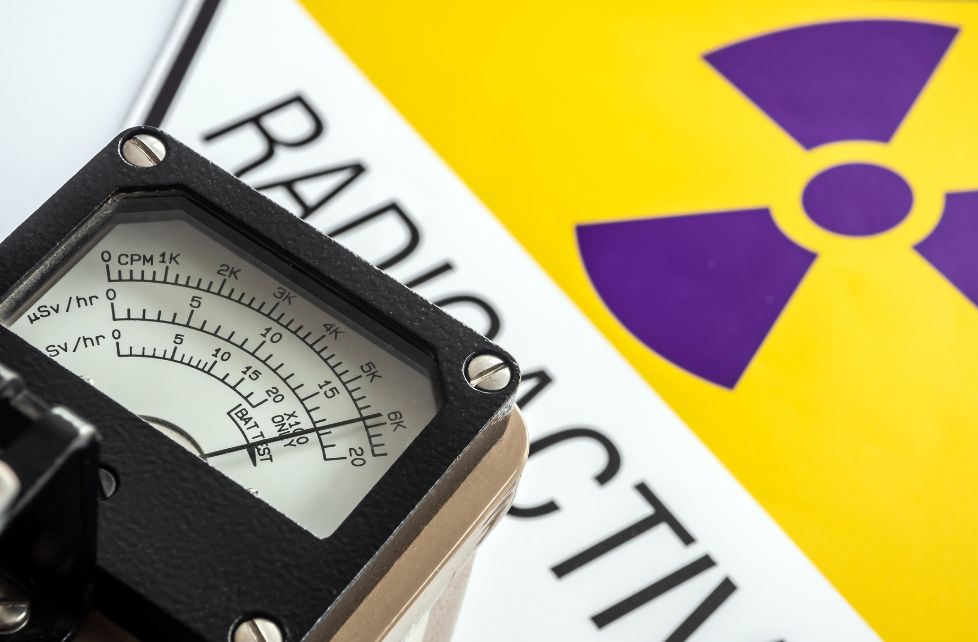
Benefits and Risks of Iodine Use During a Nuclear Disaster
The thyroid gland uses iodine to produce thyrotropic hormones (TH). Therefore, iodine, as an organic compound, is found in high concentrations in the thyroid gland. However, the thyroid gland cannot distinguish stable iodine from radioactive iodine. Consequently, after any nuclear accident accompanied by a substantial release of radioactive iodine, the thyroid gland absorbs it in exactly the same way as stable iodine.
Thyroid blocking through oral administration of potassium iodide (ITB, iodine thyroid blocking) is considered a practical and successful emergency measure for protecting the population. Stable iodine in sufficient quantities saturates the thyroid gland, thereby preventing the uptake of radioactive iodine isotopes. Thus, administration of SI before an accident and during the early stages of an accident can reliably block thyroid uptake of radioactive iodine because the thyroid gland is already saturated with stable iodine. Through such measures, internal irradiation of the thyroid gland is effectively reduced.
The use of iodine thyroid blocking (ITB) as an urgent measure in response to radioactive iodine release was first described in the 1960s–1970s and subsequently detailed in WHO recommendations in 1989 and 1999. (World Health Organization (WHO). “Iodine Thyroid Blocking: Guidelines for Use in Planning and Responding to Radiological and Nuclear Emergencies”, 2017). The period during which potassium iodide should be used is limited and applies only during the emergency phase—from several hours to one day after the onset of the emergency. A positive aspect is that adverse effects after short-term use are minimal. During the early phase, lasting from several days to weeks, an effective way to limit radioactive iodine intake may be restriction of contaminated food, milk, and water.
More relevant professional material is available via Metabolism and function of iodine in the thyroid gland
Stable Iodine Dosage Regimen
The iodine-blocking regimen is expressed either as potassium iodide (KI) or as iodide alone. 130 mg of potassium iodide is equivalent to 100 mg of iodide. In healthy adults, a single oral dose of potassium iodide reduces thyroid uptake of radioactive iodine to 1%. Administration of a higher single dose is justified because it provides a higher blood iodide level and saturates the iodine pool, ensuring the blocking effect and its duration. The same dose is recommended for pregnant and breastfeeding women.
The recommended KI dose for children is:
- 3 to 18 years: 65 mg;
- 1 month to 3 years: 32 mg;
- younger than 1 month: 16 mg;
- adolescents weighing 70 kg or more: 130 mg.
The recommended time of administration is less than 24 hours before and up to 2 hours after expected radiation exposure. In cases of prolonged exposure lasting more than 24 hours or repeated radiation exposure, as well as unavoidable ingestion of contaminated food and drinking water or inability to evacuate, daily repeat administration of KI should be considered.
Use of KI After Exposure to I-131 Provides an 80% Protective Effect
Adverse effects associated with stable iodine are rare, vary depending on age, and include:
- hypothyroidism;
- hyperthyroidism;
- allergic reactions;
- headache;
- abdominal pain;
- diarrhea;
- vomiting;
- shortness of breath;
- eczema;
- dermatitis;
- fever;
- arthralgia.
Conclusion
The use of stable iodine is a justified measure for protection against radioactive iodine and the high probability of subsequent development of thyroid cancer. Children are a priority population for exposure and should receive stable iodine first. Precise indications are mandatory when stable iodine is used for thyroid blocking. The main principle of emergency measures is timely single administration of stable iodine together with prompt evacuation from areas contaminated by radiation. Owing to the natural mechanism of physiological adaptation of the thyroid gland to iodine uptake, adverse effects can be avoided even when high doses of stable iodine are administered. However, prolonged iodine intake without an indication may be dangerous and lead to undesirable consequences.
More information on the role of iodine in thyroid physiology is available in our article Metabolism and function of iodine in the thyroid gland
References
Calcaterra V, Mameli C, Rossi V, Massini G, Gambino M, Baldassarre P, Zuccotti G. The Iodine Rush: Over- or Under-Iodination Risk in the Prophylactic Use of Iodine for Thyroid Blocking in the Event of a Nuclear Disaster. Front Endocrinol (Lausanne). 2022;13:901620. doi:10.3389/fendo.2022.901620.
Sinnott B, Ron E, Schneider AB. Exposing the thyroid to radiation: a review of its current extent, risks, and implications. Endocr Rev. 2010;31(5):756–773. doi:10.1210/er.2010-0003.
Zablotska LB, Ron E, Rozhko AV, Hatch M, Polyanskaya ON, Brenner AV, et al. Thyroid cancer risk in Belarus among children and adolescents exposed to radioiodine after the Chornobyl accident. Br J Cancer. 2011;104(1):181–187. doi:10.1038/sj.bjc.6605967.
World Health Organization. Iodine thyroid blocking: guidelines for use in planning for and responding to radiological and nuclear emergencies. Geneva: World Health Organization; 2017.
Author: Olena Vyrva, MD
Questions & Answers
Q1. When should potassium iodide be administered for thyroid blocking after a nuclear incident?
The article states that administration is recommended less than 24 hours before and up to 2 hours after expected radiation exposure. Repeated daily administration may be considered under specified circumstances involving prolonged or repeated exposure.
Q2. Which population is particularly vulnerable to radioactive iodine exposure?
Children and adolescents have a greater risk of radiation-induced thyroid cancer than adults, and the article identifies children as the priority population for stable iodine administration.