MEDPRESSO at ISOLS 2026 | Vienna, 23–26 September Global orthopaedic oncology: innovation, experience and equitable access to treatment
The 23rd General Meeting of the International Society of Limb Salvage—ISOLS 2026—took place in Vienna on 23–26 September. It brought together 930 delegates from more than 70 countries across five continents. Participants themselves highlighted the scale of the meeting, describing it as the largest forum dedicated to musculoskeletal tumours. Vienna became a meeting place for leading surgeons, researchers and engineers united by a common goal: improving treatment outcomes for patients with bone and soft-tissue malignancies.
The scientific programme focused on long-term outcomes of megaprosthetic reconstruction, biological and pelvic reconstruction, infectious complications, paediatric orthopaedic oncology, metastatic bone disease and soft-tissue sarcomas. Dedicated sessions addressed artificial intelligence, robotic surgery, mixed reality, international registries and patient-reported outcomes.
International experts featured in the programme included Franklin Sim, Lee Jeys, Jay Wunder, Peter Steadman, Philipp Funovics, Mark C. Gebhardt, Panayiotis Papagelopoulos, Juan Pablo Zumárraga, Domenico Campanacci, Matthew DiCaprio, Walid Ebeid, Francis Hornicek, Michelle Ghert, Pietro Ruggieri, Valerae O. Lewis, Dimosthenis Andreou, Ajay Puri, Jendrik Hardes and Andreas Leithner, alongside many other world leaders in orthopaedic oncology from every continent.
Key events included Peter Steadman’s presidential lecture on the future of orthopaedic oncology and international collaboration, Ajay Puri’s lecture on reimplantation of sterilised tumour-bearing bone, and a round-table discussion with pioneers of limb salvage surgery, featuring Rainer Kotz, Winfried Winkelmann, Mark C. Gebhardt and Franklin Sim. Educational courses, practical workshops and poster discussions complemented the programme.
Ukrainian experience in an international dialogue
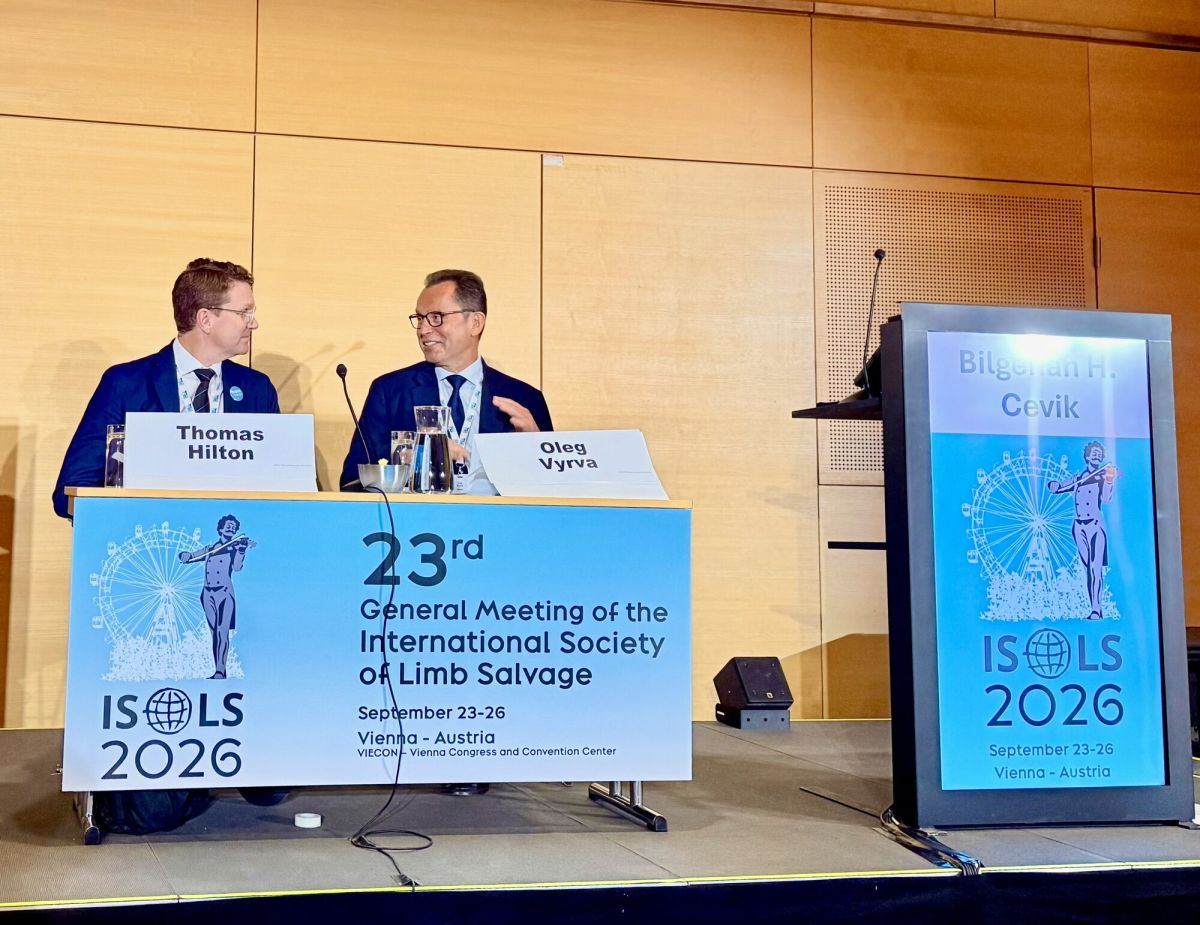
The session “Socio-Economic Disparities in Sarcoma Care,” co-chaired by Professors Thomas Hilton from South Africa and Oleg Vyrva from Ukraine, attracted particular attention. It opened with Claudia Di Bella’s lecture “Women in Surgery,” followed by 15 oral presentations and discussions.
The session brought together clinical, professional and societal aspects of care. Matthew DiCaprio presented changes in the practice patterns of early-career orthopaedic oncologists in the United States; Ali Ijaz Ahmad shared experience with vascularised fibular reconstruction in resource-limited settings; and Shea Byrne addressed the assessment of patient functioning after sarcoma treatment. Presentations by Wan Ismail Wan Faisham Numan on medical missions in Gaza and Noel Rex Penaranda on establishing a sarcoma care centre in the Philippines highlighted the challenges of organising specialist services. Contributions from Sweden, India and Germany broadened the discussion to include gender-related disparities in diagnosis, survival outcomes and digital surgical planning.
Oleg Vyrva presented “Limb Salvage Evolution in Bone Tumor Surgery: Strategic Insights from Personal Experience.” Drawing on many years of clinical practice, he examined the development of megaprosthetic, biological and composite reconstructions, as well as complex revision procedures. His principal focus was on the precision of oncological resection, individualised selection of reconstruction, soft-tissue preservation and systematic management of infectious complications. The central message was that success is defined not only by preserving the limb, but also by its long-term function, the patient’s mobility and quality of life. Technological progress must be grounded in clinical experience and sound surgical strategy.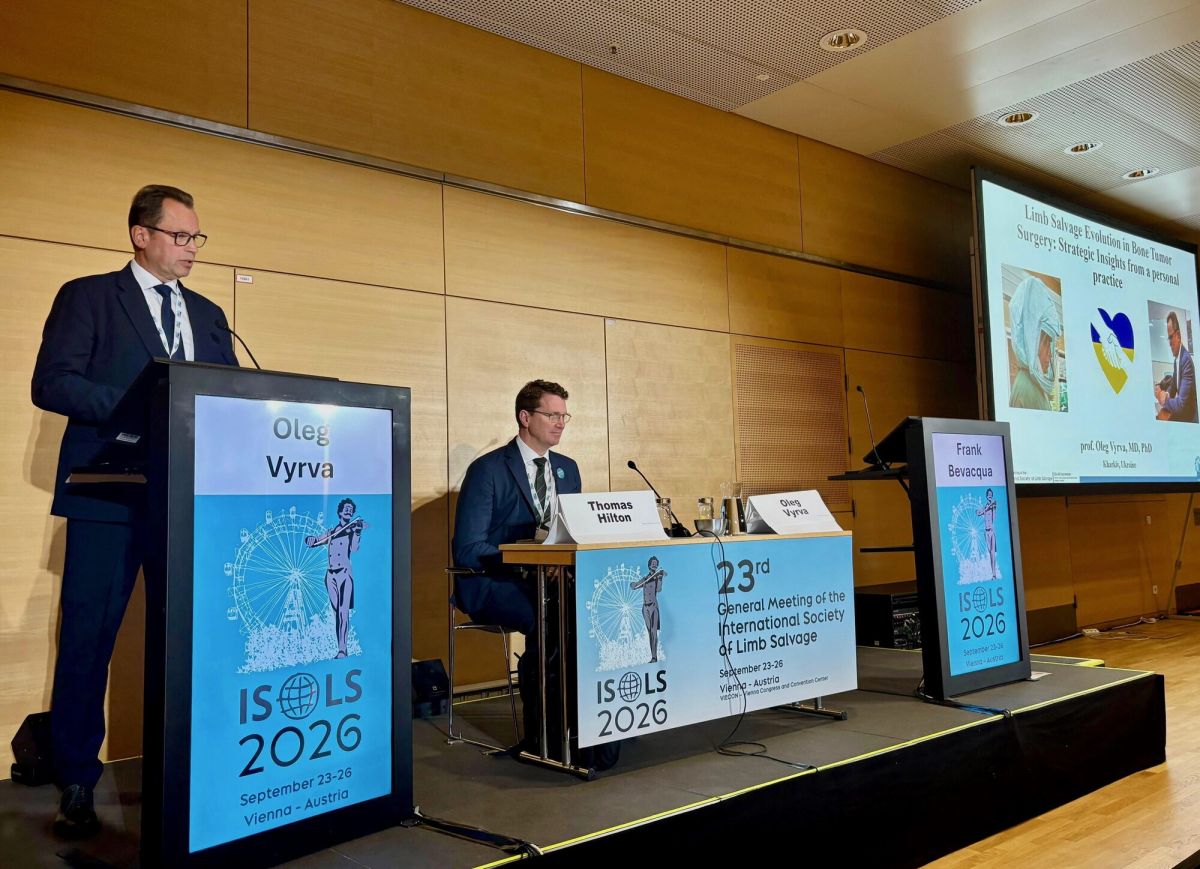
The theme of access to treatment continued with Duncan Whitwell (United Kingdom), who examined the limitations of care in developing countries, and David Wood (Australia), who presented guidelines tailored to available resources. In this context, Ukrainian orthopaedic oncology experience became part of a broader conversation about ensuring high-quality treatment across healthcare systems with differing capabilities.
ISOLS 2026 provided a platform for professional dialogue, bringing complex reconstruction and advanced technologies together around a fundamental question: how can modern care for musculoskeletal tumours be made accessible to every patient, regardless of where they live?