Progressive painful deformity of the left ankle following recurrent ligamentous injuries
History of present complaint
A 67-year-old man, a former volleyball player, presents with longstanding progressive pain and deformity of the left ankle.
Between the ages of 20 and 35 years, he sustained multiple recurrent injuries to the lateral ligament complex of the left ankle, presumably related to inversion mechanisms during sporting activities. These injuries were managed nonoperatively using soft ankle braces and elastic bandages. No formal ligament reconstruction or other definitive surgical treatment was performed.
Over the past 15 years, the patient has experienced progressively worsening ankle pain, particularly during weight-bearing activities and walking. During the last several years, he has noted a progressive increase in the deformity around the ankle joint, accompanied by a substantial deterioration in functional capacity.
At present, his walking tolerance is limited to approximately 100–200 meters because of pain. Nonsteroidal anti-inflammatory drugs provide only transient symptomatic relief, lasting several hours. The use of pronation-controlling insoles has not resulted in clinically meaningful improvement.
Past medical history
Multiple recurrent lateral ligament injuries of the left ankle between the ages of 20 and 35 years, managed nonoperatively; no previous ankle surgery. Other medical history not reported.
Drug history, allergies
Nonsteroidal anti-inflammatory drugs, with transient relief only. Allergies not reported.
Social, family history
Former volleyball player. Other social and family history not reported.
Physical exam
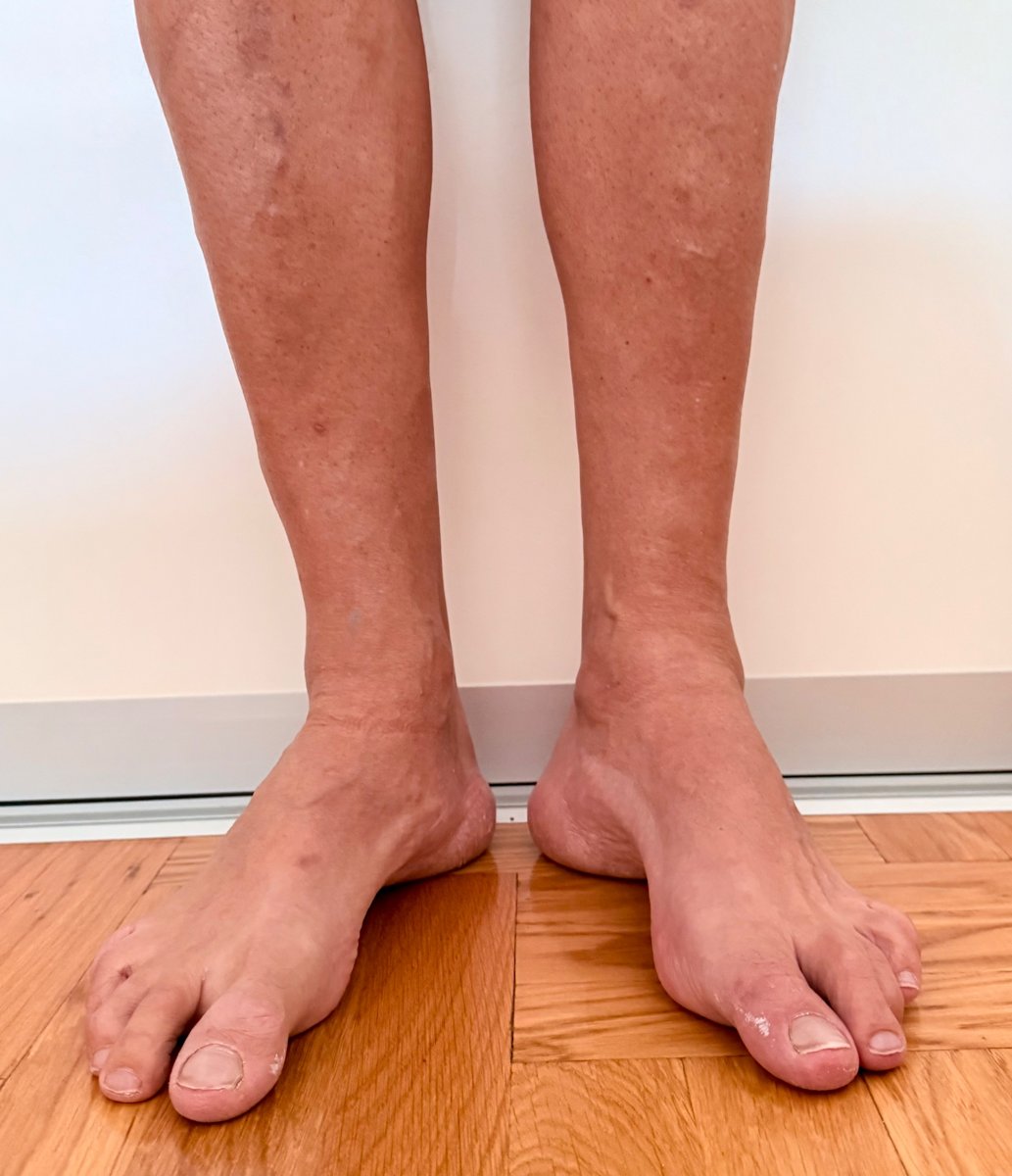
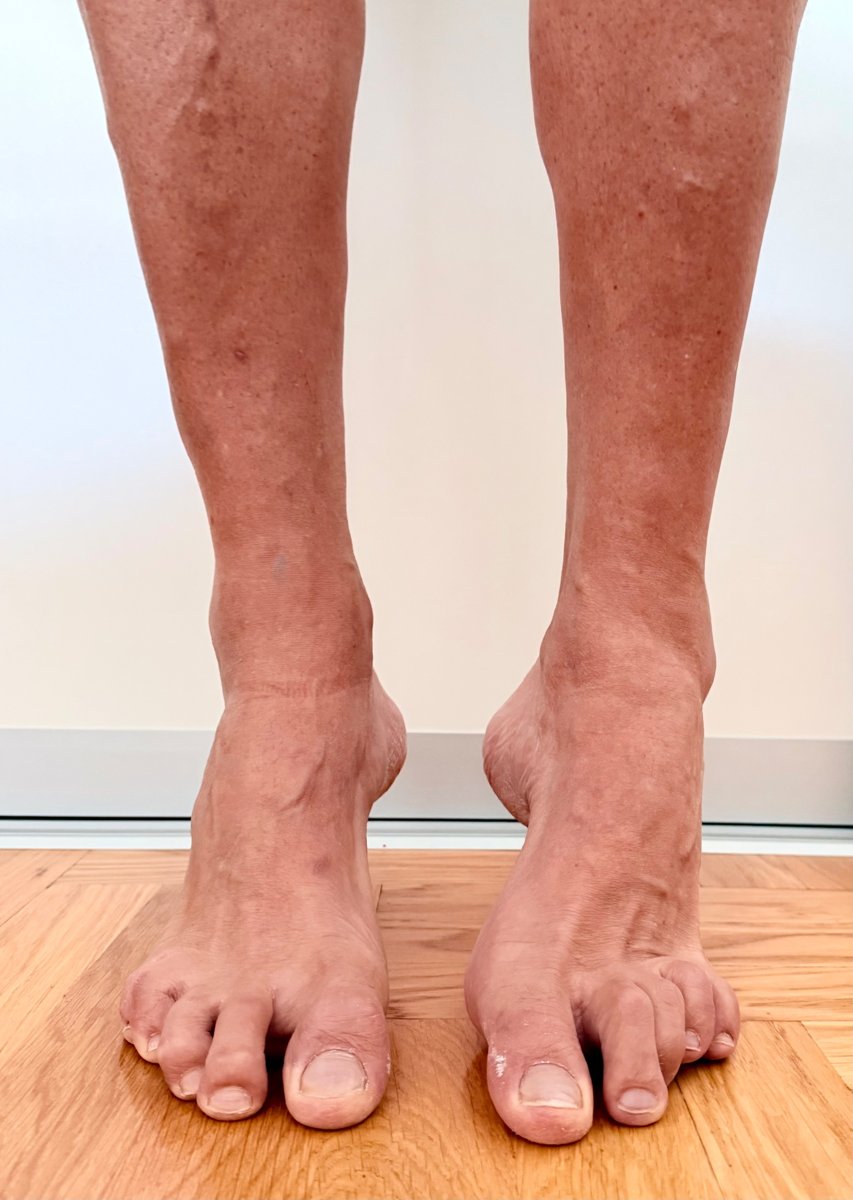
Clinical photographs: both feet in standing position and in double-limb heel rise (see images below).
Clinical impression
The clinical presentation is consistent with chronic post-traumatic degeneration of the left ankle following recurrent ligamentous injuries, potentially compounded by persistent mechanical instability and progressive malalignment.
The combination of severe activity-related pain, progressive deformity, and markedly reduced walking tolerance suggests clinically significant ankle osteoarthritis refractory to the conservative measures previously attempted.
Investigations
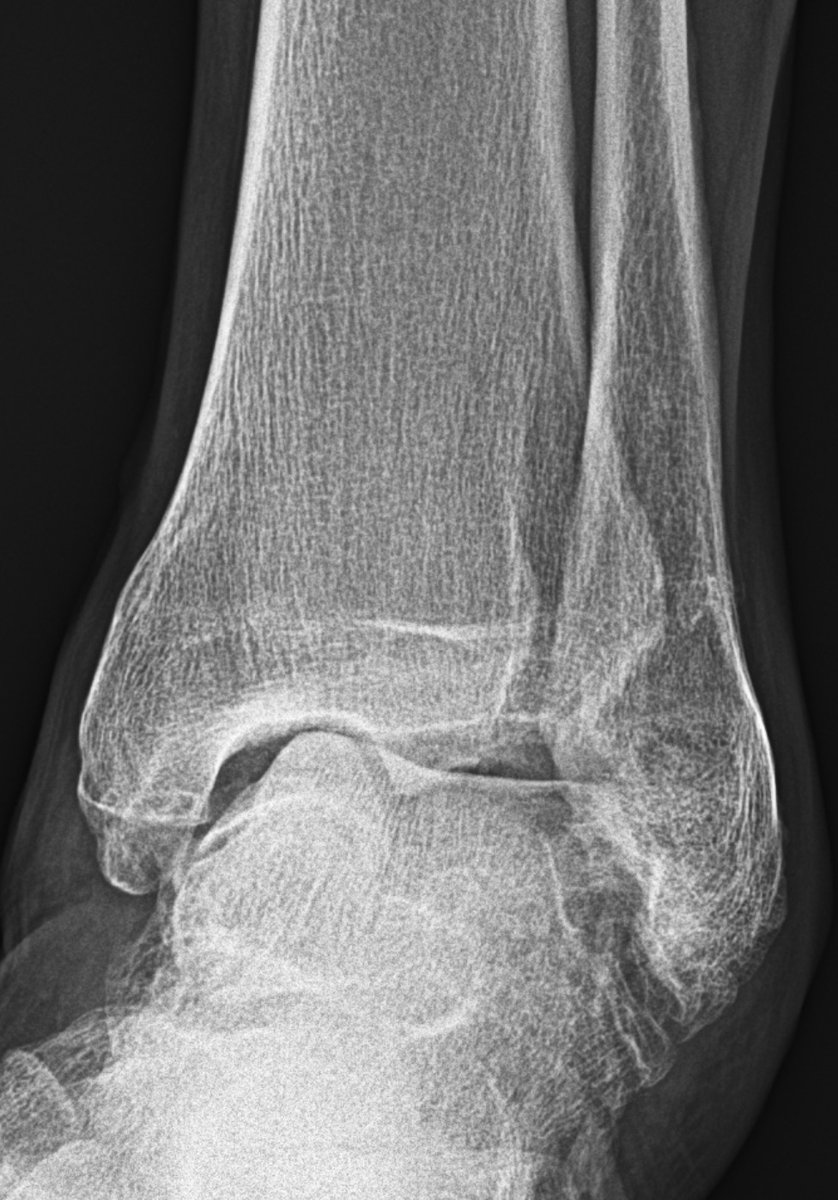
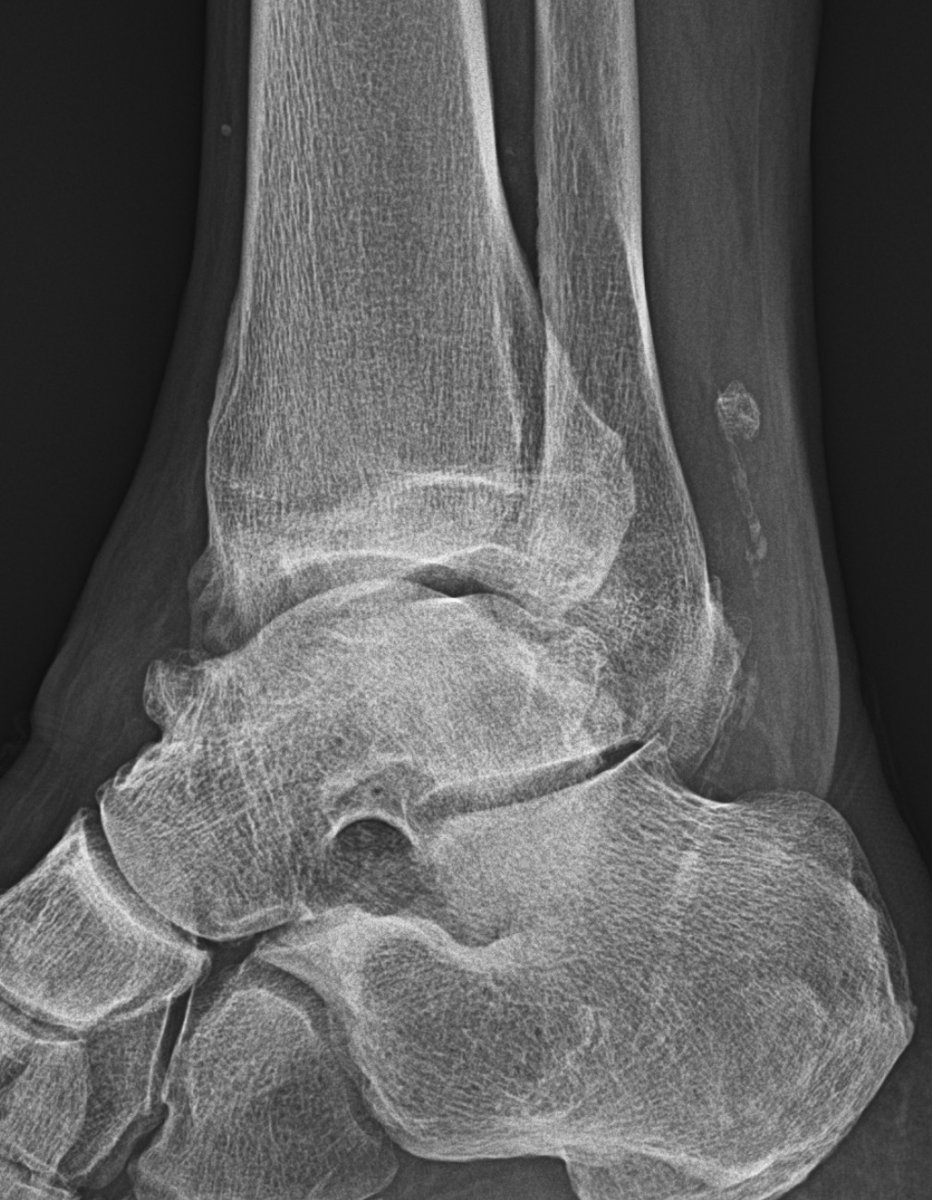
Plain radiographs of the left ankle (see images below).
Radiographic impression
Degenerative changes of the left tibiotalar joint, characterized by marginal osteophyte formation, articular contour irregularity, and subchondral sclerosis, consistent with chronic ankle osteoarthritis, most likely post-traumatic in etiology. Chronic ossific changes adjacent to the lateral malleolus may represent sequelae of previous ligamentous or avulsion injury.
Diagnosis
Primary diagnosis
Left post-traumatic tibiotalar osteoarthritis, associated with a history of recurrent lateral ankle ligament injuries and suspected chronic lateral ligament insufficiency.
Associated conditions to confirm
- Chronic lateral ankle instability.
- Possible acquired ankle and/or hindfoot malalignment.
- Chronic post-traumatic ossification adjacent to the lateral malleolus.
- Possible anterior ankle impingement due to marginal osteophytes.
Treatment
Definitive surgical treatment
Option 1 — Total ankle arthroplasty (TAA)
Potentially attractive for a 67-year-old patient who values preservation of ankle motion, particularly if there is symptomatic adjacent-joint arthritis. It requires adequate bone stock, satisfactory soft tissues and circulation, absence of relevant neuropathy or infection, and a deformity that can be corrected and balanced.
Chronic instability and malalignment must be addressed as part of the reconstruction when present. Implant longevity and the possibility of revision should be discussed.
Option 2 — Ankle arthrodesis
A reliable option for advanced painful arthritis, particularly with substantial deformity, compromised bone stock, or circumstances in which arthroplasty is unsuitable. The objective is a plantigrade, stable, pain-relieved foot.
The principal trade-off is permanent loss of tibiotalar motion, with potential compensatory loading and subsequent degeneration of adjacent joints. Nonunion, malunion, wound complications, and persistent pain are additional risks.
Both procedures can improve pain and function in appropriately selected patients. The decision should be individualized according to alignment, adjacent-joint condition, activity expectations, bone quality, soft-tissue status, and the patient's priorities.
Discussion
Which operation would I favor for this patient?
Based on the history alone, I would prioritize an evaluation for total ankle arthroplasty versus ankle arthrodesis, rather than proceed directly to isolated ligament reconstruction or arthroscopic debridement.
At 67 years of age, with walking tolerance restricted to 100–200 meters and progressively worsening deformity, joint replacement deserves serious consideration if the patient has suitable anatomy and wishes to preserve ankle motion. Arthrodesis remains a strong alternative if the joint is severely deformed or unsuitable for replacement.
However, his former athletic background does not automatically favor fusion, nor does his age automatically favor replacement. His current activity demands, expectations, and the actual extent of joint degeneration are more important than age alone.
Conclusion and proposed management strategy
This case illustrates the long-term consequences of recurrent ankle ligament injuries and possible chronic mechanical instability, culminating in progressive post-traumatic tibiotalar osteoarthritis.
The patient's substantial pain, progressive deformity, markedly reduced walking capacity, and inadequate response to conservative treatment indicate the need for surgical treatment.
If advanced diffuse tibiotalar degeneration is confirmed, total ankle arthroplasty and ankle arthrodesis should be discussed as the principal definitive surgical options. The final decision should be based on anatomical suitability, functional expectations, comorbidities, and informed patient preference.
Author: Prof. Oleg Vyrva, MD