Best sources of protein
The proportion of proteins ranges from 15% to 20% of body weight of the human body. Proteins are responsible for building and development of the body, and its immunity. They are the basis for hormones and enzymes, they carry oxygen, and perform many other vital functions. The need for proteins in each person is individual, depending on age, lifestyle, and physique. However, everyone needs them.
The World Health Organization (WHO) recommends that healthy adults consume 0.83 g of protein per day per kilogram of body weight. The Recommended Dietary Allowance (RDA) for protein intake in the US and Canada is set at 0.8 grams per kilogram of body weight. European health authorities recommend to people with moderate physical activity to consume the same amount of protein. Additionally, we note that athletes, pregnant and lactating women, and seniors need more protein.
Lack of protein will not be a problem if you include a variety of protein-rich foods in your diet. Here are some affordable and easy to prepare options.
Eggs
Eggs are an excellent source of high-quality protein containing all nine essential amino acids. In a large egg (weighing about 50 grams), there are approximately 2.7 grams of protein in the yolk, and 3.6 grams are in the white of the egg.
Whole eggs are known not only for their high protein content. They contain vitamins A, B4 (choline), and B12 (cobalamin), selenium, healthy fats, and antioxidants. “An egg should have all the necessary ingredients for growing an organism, and it is quite natural that it is saturated with nutrients,” says Christopher Blesso, associate professor of nutrition at the University of Connecticut, USA.
It is thought that eating eggs increases the level of cholesterol in the body, and this increases the risk of cardiovascular disease. However, current research does not support this view. “Cholesterol becomes bad when it oxidizes in our arteries, but egg cholesterol does not oxidize,” emphasizes Dr. Blesso. “Eggs contain all kinds of antioxidants that prevent this process.”
Chicken breast
Chicken fillet is considered the most dietary part of the chicken, and compares favorably with beef, pork. It is low in fat and cholesterol, it is easy to prepare, and it is an integral part of many dishes: its presence makes them more satisfying and diversifies the taste. Eating chicken breast to increase protein intake is recommended for people prone to gaining excess weight. Chicken breast is also present in the diet of athletes and people leading an active lifestyle.
Chicken breast is a low-calorie product and is great for those who watch their weight.
100 g of raw chicken breast contain at least 19 g of protein. In addition, it contains B vitamins, and such microelements as phosphorus, zinc, selenium, iron, and other nutrients necessary for the body.
Cottage cheese
High-protein products include cottage cheese, 100 g of which contain from 16 to 18 g of protein, depending on its fat content (the best in terms of protein is cottage cheese with 5% fat content). It is also rich in calcium - the basis of human bones, teeth and cartilage, phosphorus, iron, and potassium.
Cottage cheese is perfect for making desserts, fruit salads, casseroles that are tasty and satisfying. However, it is important for cottage cheese to be natural, without unnecessary additives that unscrupulous manufacturers can use: starch, palm oil, etc. Such impurities reduce the quality of the product and, instead of benefiting, can be harmful to health.
In addition to cottage cheese, a lot of protein is found in such soft cheeses as mozzarella and feta, which are traditionally present in many Mediterranean dishes.
Greek yogurt
The technology for the production of Greek yogurt involves the removal of almost all whey. It has a low content of carbohydrates and sugar, thereby increasing the concentration of protein: 100 g of this product contains about 10 g of protein. Studies have shown that people who are involved in weight training or other physical exercises and want to increase muscle mass, need 20 g of dietary protein (200 g of Greek yogurt) immediately after exercise.
Such microelements as calcium, iodine, magnesium, potassium, selenium, vitamins A and B12, probiotics contained in Greek yogurt further increase its nutritional value. Its creamy texture and original taste make it possible to use it instead of sour cream and mayonnaise for salad dressing, as a sauce to meat dishes. Adding fruits and nuts to Greek yogurt makes it a wonderful, tasty and healthy dessert.
Fish and seafood
Fish and seafood are integral parts of the Mediterranean diet, which experts consider one of the most balanced and healthy. They contain a complete protein with all the essential amino acids that a person needs. Protein from seafood is digested without overloading the digestive tract, and is well absorbed by the body.
All types of fish are rich in protein: 100 g of tuna contains about 25 g of protein, mackerel - 18 g, salmon and trout - up to 20 g. Among seafood, shrimp, mussels, crabs, and squid stand out with a high content of high-quality protein per 100 g of product.
Fish is also a source of such important trace elements as potassium, magnesium, selenium, iodine, vitamins A, D, and vitamin B group. Oily fish contains essential omega-3 fatty acids. Seafood is rich in vitamin E, which is a strong antioxidant that protects cells from the effects of toxins.
Nuts
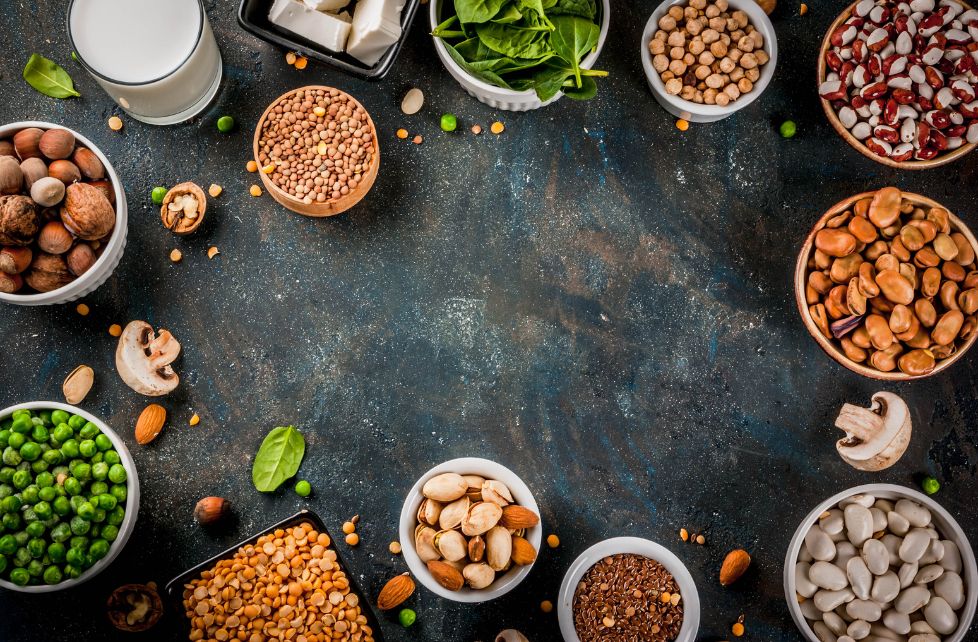
For vegetarians and vegans, nuts are excellent for getting the right amount of protein. According to USDA (United States Department of Agriculture), the following types of nuts contain the largest amount of vegetable protein (in terms of 100 grams):
- peanut (peanut) - 25.8 g;
- almonds - 21.15 g;
- pistachios - 20.16 g;
- cashew - 18.22 g;
- walnut - 15.23 g;
- hazelnuts - 14.95 g.
In addition to protein, nuts contain many other substances necessary for the human body: fats, carbohydrates, such microelements as potassium, magnesium, iron, calcium, phosphorus, and fiber. However, like most foods, they are best consumed in moderation. Some people may have an allergic reaction, at the first sign of which, to avoid its development into a severe form, it is necessary to consult a doctor.
Lentils
Lentils are a good alternative to animal proteins. People have been eating lentils since the Stone Age, and they were a common daily meal in ancient Greece. In boiled form, 100 g of lentils contain about 9 g of vegetable protein.
Protein is found in many other products, which allows to create a menu for every taste. It is important that the diet is varied and balanced, having enough of all the components necessary for life. Then your body will remain healthy and beautiful for a long time.