Cervicalgia (neck pain). Causes, symptoms, diagnosis
Neck pain, also known as cervicalgia, ranks fourth among all musculoskeletal disorders, with lower back pain being the most common (ranked first). The frequency and prevalence of cervicalgia increase with age and are more prevalent among women than men. Up to 70% of people experience neck pain at some point in their lives, but this does not necessarily hinder their daily activities. In the Global Burden of Disease study (D. Hoy et al, 2014), cervicalgia is ranked fourth in terms of overall disability.
Cervicalgia is defined as pain in the neck proper without radiation or with radiation into one or both upper limbs lasting for at least one day. It may also be accompanied by headaches and shoulder pain, but the primary complaint is neck pain.
In 2021, the Journal of Physiotherapy published an article titled “Physiotherapy Management of Neck Pain” by Arianne P Verhagen, which presents a classification of cervicalgia.
Grade explanation
The classification includes four grades:
Grade I: Neck pain and related disorders without symptoms indicating significant structural pathology. Minimal or no impact on daily activities.
Grade II: No symptoms of significant structural pathology. Marked limitations in daily activities.
Grade III: No symptoms of significant structural pathology. Presence of neurological signs, such as decreased deep tendon reflexes, weakness, and sensory disturbances in the upper limb.
Grade IV: Symptoms of significant structural pathology, which may include (but not limited to) fractures, dislocations, spinal cord injury, infection, neoplasms, or systemic diseases, including inflammatory arthropathies.
More than 90% of patients exhibit Grade I or Grade II manifestations. The occurrence of Grade IV symptoms is relatively low, around 2%.
Factors influencing an increased risk of developing neck pain include:
- Trauma
- Occupational factors
- Psychological factors
- Smoking
Diagnosis
The diagnostic process includes:
- History taking: gathering patient's medical history
- Check-up: physical examination
- Diagnostic imaging: visualization methods
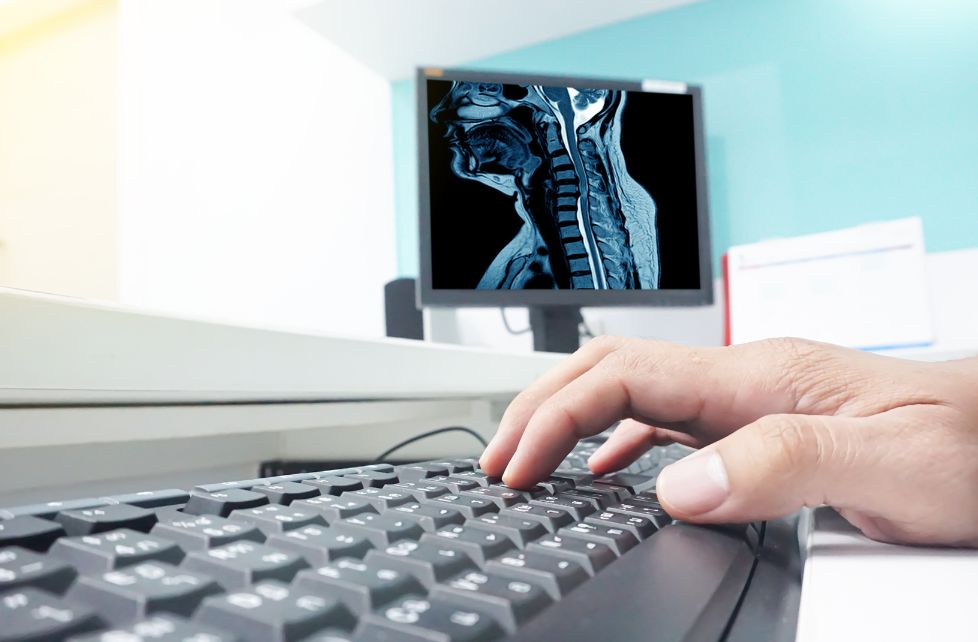
Patients with neck pain often report a history of trauma, such as whiplash-associated disorder, typically resulting from car accidents. Identifying potential occupational factors that may contribute to the pain is also essential, such as job dissatisfaction, high levels of stress, and forced working postures. Complaints of headaches may also be related to cervicogenic headache, which develops as a result of neck pain and worsens with neck movements. Radiating arm pain is often associated with cervical radiculopathy, which manifests neurological symptoms like sensory disturbances in the fingers and decreased reflexes at the elbow and wrist levels.
The goal of the physical examination is to confirm or rule out the diagnosis of cervicalgia. The examination includes:
- Posture assessment
- Palpation
- Range of motion evaluation
- Measurement of muscle strength
- Reflex testing
- Sensation testing
- Special tests: Traction test, Upper Limb Tension Test, Shoulder Abduction Test, Spurling's Test (a foraminal compression test to evaluate cervical radiculopathy).
Most clinical protocols for cervicalgia do not recommend imaging (CT, MRI). Diagnostic imaging is recommended to rule out cervical radiculopathy (cervical disc herniation). CT is best for visualizing cervical spine fractures, while MRI provides better visualization of cervical disc herniation.
Prognosis
Various research sources indicate that 50% to 85% of patients do not achieve full recovery, suggesting a recurrent nature of cervicalgia. Furthermore, data reviews have shown that neck pain decreased by 45% only within the first 6.5 weeks, with no further reductions observed in later stages.
How to properly manage patients with cervicalgia?
What are the effective methods for treating neck pain?
Read about it in our article “Treatment of Neck Pain.”